


Table of Contents
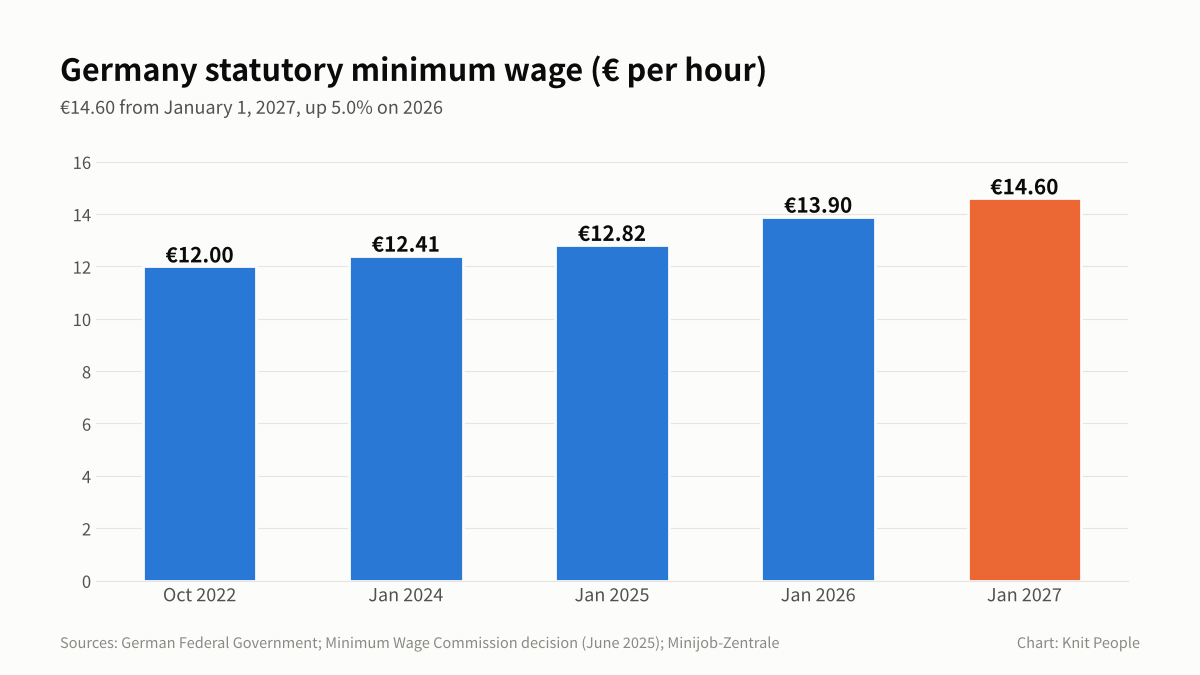
The short answer: Germany's statutory minimum wage rises from €13.90 to €14.60 an hour on January 1, 2027. The minijob earnings ceiling is tied to the minimum wage, so it rises from €603 to €633 a month, and the midijob (transition) band becomes €633.01 to €2,000 a month. The 2027 social security contribution ceilings are also set to rise, subject to approval by the Bundesrat, the upper house of Germany's parliament. The deadline for transposing the EU Pay Transparency Directive passed on June 7, 2026. The German government says a draft law is being prepared, but as of late October 2026 it had not been published.
Key takeaways
- Minimum wage: €14.60 an hour in 2027, or about €2,531 a month for a 40-hour week.
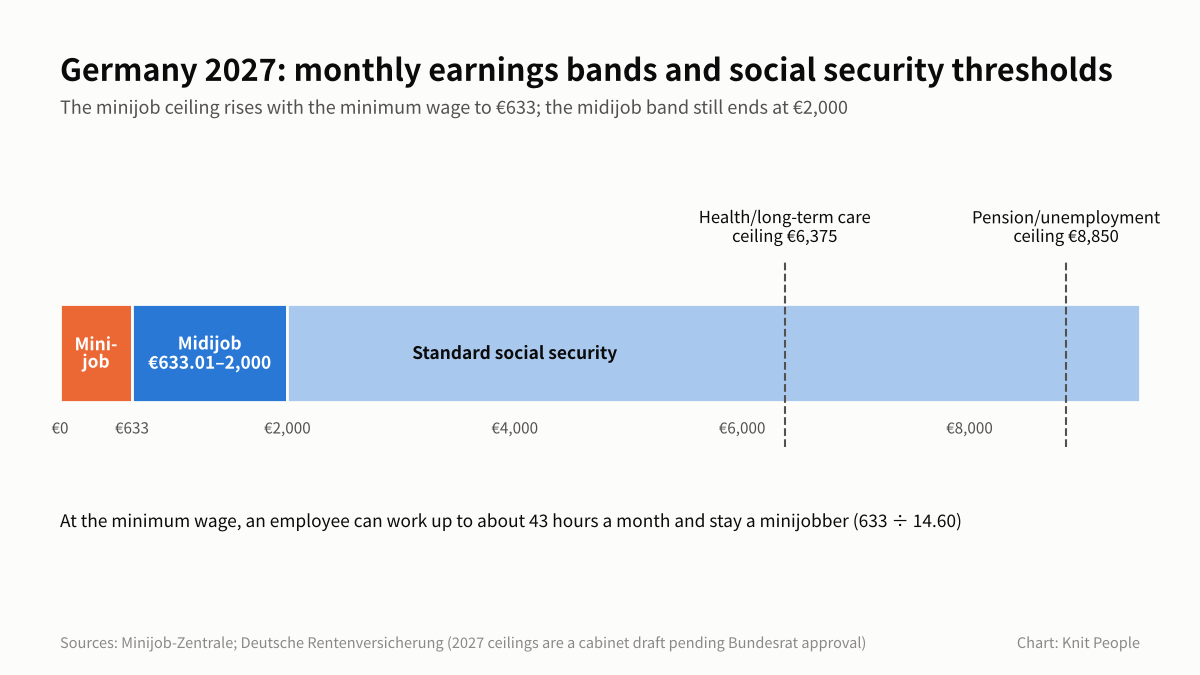
- Minijobs: the ceiling rises to €633 a month, which is up to about 43 hours at the minimum wage.
- Midijobs: the band runs from €633.01 to €2,000, with reduced employee social security contributions.
- Social security ceilings: €8,850 a month for pension and unemployment insurance and €6,375 for health and long-term care insurance (pending approval).
- Pay transparency: Germany hasn't transposed the directive yet. Until a new law takes effect, private employers remain subject to the 2017 Pay Transparency Act.
Germany 2027 payroll figures at a glance (as of October 19, 2026)
- Minimum wage: €13.90 an hour in 2026 and €14.60 from January 1, 2027, as recommended by the Minimum Wage Commission and set by government regulation. German Federal Government (in German)
- Minijob ceiling: €633 a month in 2027, calculated as minimum wage × 130 ÷ 3 and rounded up. Minijob-Zentrale (in German)
- Social security ceilings: on October 7, 2026, the federal cabinet approved the 2027 figures: €8,850 a month for pension insurance and €6,375 for health and long-term care insurance, pending Bundesrat approval. Deutsche Rentenversicherung (in German)
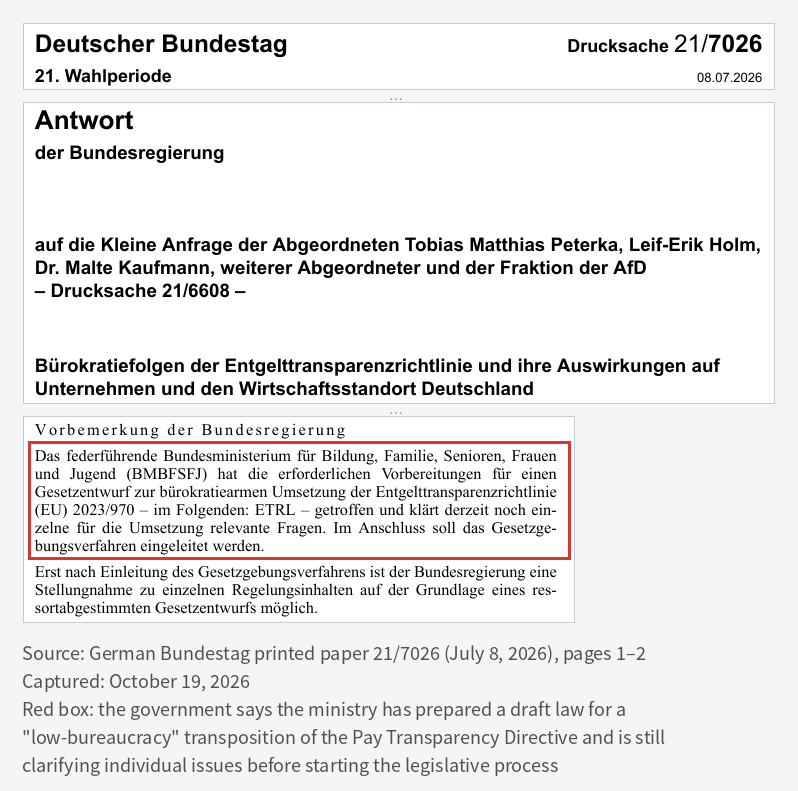
- Pay transparency: in July 2026, the government told parliament it had prepared a draft law to transpose the directive and was still clarifying individual issues. Bundestag printed paper 21/7026 (in German)
The social security ceilings become final once the regulation is approved by the Bundesrat and published.
1. What is Germany's minimum wage in 2027?
Germany's statutory minimum wage is the hourly pay floor set under the Minimum Wage Act (Mindestlohngesetz). It covers almost all employees aged 18 and over working in Germany, including minijobbers. From January 1, 2027, it is €14.60 an hour.
Keep in mind:
- Sector minimum wages: some industries, such as temporary agency work, have higher sector-specific minimums. The higher rate applies.
- Salaried staff: check actual hours worked so that the effective hourly rate never falls below €14.60, especially in roles with a lot of overtime.
- Next review: the Minimum Wage Commission is expected to decide on the rate from 2028 in June 2027.
2. How do the minijob and midijob thresholds change?
A minijob is low-paid employment with monthly earnings at or below a statutory ceiling. The ceiling is linked to the minimum wage: it equals 10 hours a week at the minimum wage (minimum wage × 130 ÷ 3, rounded up). The transition band (Übergangsbereich, usually called a midijob) runs from just above the minijob ceiling to €2,000 a month, and employees in it pay reduced social security contributions.
What to watch for:
- Hourly-paid minijobs: once the hourly rate rises, the same hours may push earnings above €633, so check rotas.
- Occasional overruns: earnings can go over the ceiling unexpectedly in up to two months within a 12-month period without losing minijob status, as long as earnings in that month don't exceed twice the ceiling.
- Employer flat-rate charges: separate reform proposals would raise the employer's flat-rate health contribution for minijobs from 13% to about 17.5% and the flat-rate tax from 2% to 5% in 2027. Build these into your budget and watch for the final legislation.
3. What are the 2027 social security contribution ceilings?
The contribution ceiling (Beitragsbemessungsgrenze) is the maximum salary on which social security contributions are charged. Earnings above it attract no contributions. The federal cabinet approved the 2027 figures on October 7, 2026, and they now need Bundesrat approval:
Higher ceilings mean higher employer social security costs for well-paid employees.

4. Where does Germany's pay transparency law stand?
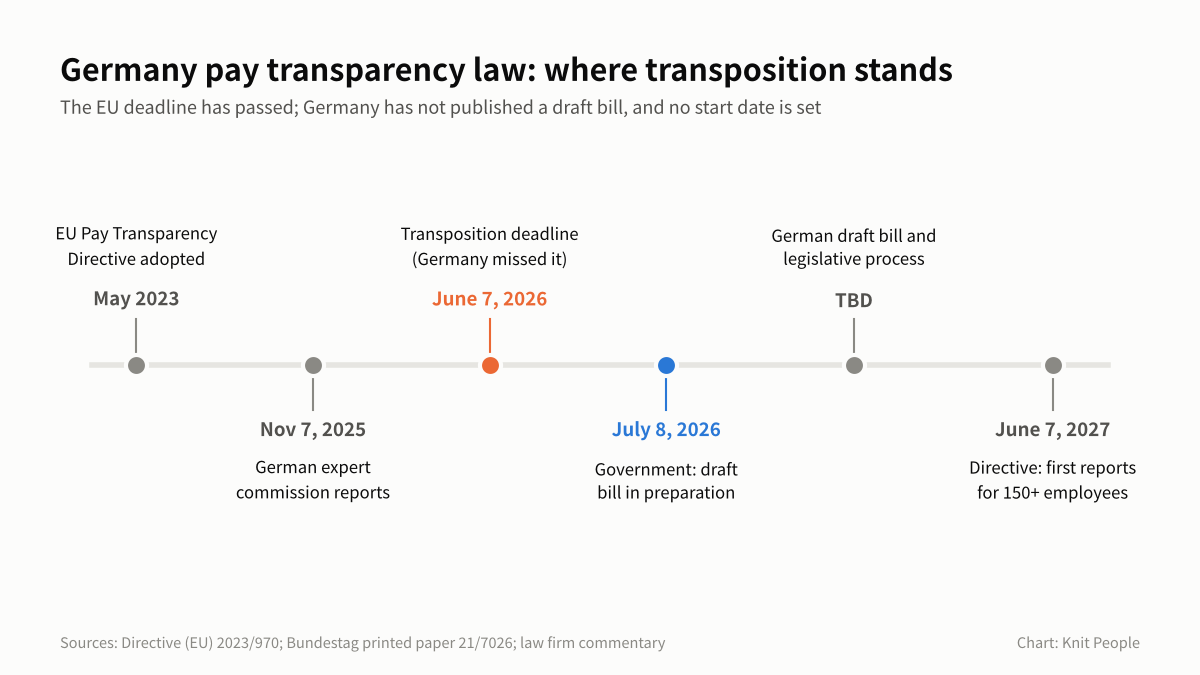
The EU Pay Transparency Directive ((EU) 2023/970) required member states to transpose it by June 7, 2026. It requires employers to disclose starting pay or a pay range during recruitment, bans questions about salary history, gives employees the right to information on average pay for comparable roles, and phases in gender pay gap reporting by company size.
Here's the position as of late October 2026:
- The deadline has passed. Germany didn't complete transposition by June 7, 2026.
- No draft bill yet. In July, the government told parliament the responsible ministry had prepared a draft for a "low-bureaucracy" transposition and was still clarifying individual issues before starting the legislative process. It gave no timetable. As of October 21, no ministerial draft (Referentenentwurf) had been published, and practitioners expect one around the turn of 2026/2027.
- The current law still applies. Until a new law takes effect, private employers remain subject to the 2017 Pay Transparency Act (Entgelttransparenzgesetz). Law firms take the view that the directive doesn't apply directly to private employers, but courts must interpret existing law in line with it as far as possible. Public-sector employers may face more direct exposure.
- Reporting dates: under the directive, employers with 250+ employees report annually and those with 150–249 every three years, both starting June 7, 2027. Employers with 100–149 employees first report on June 7, 2031. Whether Germany keeps these dates depends on the final law.
5. What to update in your 2027 Germany payroll budget
6. The bottom line
From January 1, 2027, Germany's minimum wage rises to €14.60 an hour and the minijob ceiling to €633. Social security ceilings are also set to rise, and the pay transparency law is still being prepared. To get ready:
- Before December, check every employee's effective hourly rate and minijob hours.
- Once the Bundesrat approves the 2027 ceilings, update them and recalculate costs for higher earners.
- Start documenting job levels and pay bands now to prepare for the pay transparency law.
7. About Knit People
Knit People was founded in Canada in 2015 and began as a global payroll provider. It runs four operations centers, in Canada, China, the Philippines and Europe, and holds a government-registered MSB license. Its core services are employer of record (EOR), professional employer organization (PEO), global payroll and contractor of record (COR). It also offers recruitment, entity setup, tax compliance, benefits administration and work visa support. Knit People combines regional operations centers with in-country experts. It covers 172 countries and regions, has served more than 4,000 companies and 12,000 employees, and processes over RMB 4 billion in payroll a year.
8. FAQ
Q1:What is Germany's minimum wage in 2027?
From January 1, 2027, Germany's statutory minimum wage is €14.60 an hour, up about 5% from €13.90 in 2026. For a 40-hour week, that's about €2,531 a month.
Q2:What is the minijob earnings limit in 2027?
The minijob ceiling is €633 a month, or €7,596 a year, in 2027. It's linked to the minimum wage and allows up to about 43 hours a month at the minimum wage.
Q3:What is the midijob range in 2027?
In 2027, the midijob (transition) band runs from €633.01 to €2,000 a month, with reduced employee social security contributions. The lower limit rises with the minijob ceiling, while the upper limit stays at €2,000.
Q4:What are Germany's social security contribution ceilings for 2027?
The federal cabinet approved the 2027 figures on October 7, 2026: €8,850 a month for pension and unemployment insurance and €6,375 a month for health and long-term care insurance. They still need Bundesrat approval.
Q5:When will Germany's pay transparency law take effect?
No date has been set. The deadline for transposing the EU Pay Transparency Directive passed on June 7, 2026, and Germany hasn't published a draft bill. Until a new law takes effect, private employers remain subject to the 2017 Pay Transparency Act.
9. Sources
- German Federal Government: Mindestlohn steigt (in German) (accessed October 19, 2026)
- Minijob-Zentrale: Mehr Verdienst im Minijob: Mindestlohn steigt 2026 und 2027 (in German) (accessed October 19, 2026)
- Minijob-Zentrale: Minijob 2027: Verdienstgrenze und Mindestlohn steigen (in German) (accessed October 19, 2026)
- Deutsche Rentenversicherung: Beitragsbemessungsgrenzen 2027 sollen steigen (in German) (accessed October 19, 2026)
- German Bundestag: printed paper 21/7026 (July 8, 2026, in German) (accessed October 19, 2026)
- Addleshaw Goddard: Pay transparency in Germany after 7 June 2026 (accessed October 19, 2026)
- NAVIT: Entgelttransparenzgesetz 2026 – status update (in German, updated October 21, 2026) (accessed October 27, 2026)
Update log
- October 27, 2026: First published
Disclaimer: This article is based on publications from the German Federal Government, Deutsche Rentenversicherung, Minijob-Zentrale and the Bundestag, along with law firm commentary. It is for general information only and is not legal, tax or payroll advice. The social security ceilings become final once the regulation is approved by the Bundesrat and published, and pay transparency obligations will depend on the final German law.


