Table of Contents
A Mainland resident who takes a job in Hong Kong is normally assessed under the Admission Scheme for Mainland Talents and Professionals (ASMTP), not the General Employment Policy (GEP), which excludes Mainland residents. Both schemes are quota-free for the main stream, require a genuine vacancy and market-level pay, and are filed online by the applicant and the employing company. The Immigration Department (ImmD) states a target of about four weeks once documents and fees are complete. No minimum salary is published, and we found no announced 2027 change to ASMTP or GEP criteria. An EOR may serve as the local employer only if it is a Hong Kong company that meets the criteria, which ImmD pages do not address, so confirm with ImmD and Hong Kong counsel.
Table of Contents
- The Short Answer: Which Scheme Applies to Your Mainland Hire
- ASMTP vs GEP Side by Side
- Who Counts as a Mainland Resident for Scheme Purposes
- How ImmD Assesses the Application: The Criteria
- The HK$2 Million Rule and the Talent List
- The Hong Kong Employer and the Online Application
- The Mainland-Side Steps: Consent Letter, EEP and Exit Endorsement
- Fees, Initial Stay and Extensions (the 3+3+2 Pattern)
- Timeline: About Four Weeks, Plus the Steps Around It
- Where an EOR Fits, and How Knit Supports It
- Illustrative Scenario (Hypothetical, Not a Real Client)
- Application Checklist, the 2027 Outlook and Open Questions
- Frequently Asked Questions
- Glossary of Key Terms
- About Knit
- Related Reading
1. The Short Answer: Which Scheme Applies to Your Mainland Hire
For an employee who lives in the Mainland, the Hong Kong work route is normally the ASMTP, not the GEP. The names make this look like a minor detail. It is not. The two schemes are built on near-identical criteria, but ImmD sends applicants to one or the other based on where the person lives and what travel document they hold. Choosing the wrong scheme at the start wastes a non-refundable application fee and weeks of planning.
Chinese companies expanding to Hong Kong face this question often. The company is Chinese, the employee is Chinese, and Hong Kong is part of China. Yet Hong Kong runs its own immigration control. For an employee who is a Mainland resident, entry for employment is a permission issued by ImmD, and it is tied to a specific job. For an employee who is a Chinese national living outside the Mainland, a different rule can apply. We cover that boundary in section 3.
Here is what the official pages say on the points that matter most to an HR head, a mobility lead or a CFO:
- Who it is for. ASMTP is for Chinese residents of the Mainland with special skills, knowledge or experience that are of value to Hong Kong and not readily available there. The GEP page excludes Chinese residents of the Mainland.
- Who applies. The applicant and the employing company submit the application online.
- Quota. The main ASMTP stream is quota-free and not limited to particular sectors. A separate Technical Professionals stream has quotas and is outside the scope of this article.
- Pay. Remuneration should be broadly in line with the prevailing market level for professionals in Hong Kong. ImmD publishes no minimum salary figure on either page.
- Timing. ImmD says an application normally takes about four weeks after it receives all required documents and the fee.
- Employer. The employer needs a Business Registration Certificate and must show financial standing and company background. In practice that means a company registered in Hong Kong. We explain why we phrase it that way in section 6.
Two cautions apply to everything below. First, this article covers work authorization only. It does not cover settlement, long-term residence or talent-attraction routes. Second, ImmD states on its own pages that criteria may change without prior notice and that approval rests on the Director's discretion. Treat this article as a map to the official pages, not a substitute for them. We link each source in the text so you can read it yourself.
2. ASMTP vs GEP Side by Side
The table below compares the two schemes on the points a hiring team needs first. It is built from the ImmD pages for ASMTP and GEP, and from the ImmD overview of admission schemes. Page dates differ, so check the live pages before filing.
Three observations help when reading this table.
The two schemes mirror each other. For a hiring team, the day-to-day work (offer letter, employer documents, remuneration evidence, online filing) is almost the same. The scheme choice mostly changes the applicant's side: a Mainland resident has Mainland-side steps, and a consent letter requirement that the GEP does not have.
Do not choose by preference. HR teams sometimes ask which scheme is "easier." The GEP page excludes Mainland residents, so a Mainland resident cannot select it. The choice depends on the applicant's residence and travel document, not on the employer's preference.
The Technical Professionals streams are separate. Both schemes have a stream for technical professionals, and those streams are subject to quota. This article does not cover them. If your role is a skilled-trade position, ask ImmD or local counsel which stream applies.
3. Who Counts as a Mainland Resident for Scheme Purposes
The scheme names use "Mainland" in a specific way. The ASMTP page speaks of Chinese residents of the Mainland. The GEP page excludes "Chinese residents of the Mainland" and says that Mainland residents who are not non-local graduates but have special skills may apply under ASMTP instead.
The GEP page then describes a group that Chinese employers should know about: overseas Chinese who hold PRC passports. According to the page (dated April 2026), such a person may apply under the GEP if they have permanent residence overseas, or have lived overseas for at least one year immediately before applying and apply from overseas. The page defines "overseas" as places outside the Mainland, Hong Kong, Macao and Taiwan.
For a Chinese company, this produces a simple sorting exercise before any hire is confirmed:
The table is a sorting aid, not a determination. The facts that decide it include where the person lives on the day of filing, how long they have lived there, and which passport or permit they hold. ImmD decides the category, so if the facts are unclear, ask ImmD or Hong Kong counsel before paying a non-refundable fee.
One more point on terms. A person who is Chinese in nationality is a "foreign national" from the point of view of the destination country in most of the world. In Hong Kong, the legal categories instead run through residence and travel documents, as above. Our other guides in this series cover the usual foreign-national rules for other destinations. For this one, use the ImmD categories.
The ImmD page on entry arrangements for Mainland, Macao, Taiwan and overseas Chinese residents, dated June 2026, lists employment-related options for Mainland residents and states that most other Mainland visitors use an Exit-entry Permit with a purpose-specific endorsement. It also describes a One-way Permit, but that is a settlement mechanism through the Mainland authorities, not a work route, so we leave it aside.
4. How ImmD Assesses the Application: The Criteria
Both pages list the same core criteria. In paraphrase, ImmD looks at the following.
- No security objection and no known record of serious crime. This is a character check on the applicant.
- Education and experience. The applicant should normally have a first degree in a field relevant to the job. The pages allow good technical qualifications, proven professional abilities or relevant experience in place of a degree, with documentary evidence.
- A genuine job vacancy. The role has to be real. A position created only to support an application is the case this criterion is aimed at.
- A confirmed offer for a relevant job. The job should relate to the applicant's qualifications and should be one that cannot readily be taken up by the local workforce.
- Market-level pay. Remuneration should be broadly commensurate with the prevailing market level for professionals in Hong Kong.
Four practical points follow.
"Cannot be readily taken up by the local workforce" is the criterion that needs a story. The employer should be ready to explain why the role needs this person: specific skills, a Mainland market connection, language, systems knowledge or an experience profile that is hard to find locally. We do not say what evidence ImmD will accept, because the pages do not set it out. What we can say is that two situations remove the need for this proof altogether, and we cover them in section 5.
"Market level" has no published number. Neither page states a minimum salary. We found no published salary floor for ASMTP or GEP, so any figure you see elsewhere should be treated as an unofficial rule of thumb. The test in the text is comparison with the market for professionals in Hong Kong in that role. Evidence might include the company's pay for similar roles, published salary surveys and the job's grade. Keep the evidence on file.
The offer and the application must match. The employer submits its employment contract or letter of appointment. If the job title, duties or pay in the offer differ from what the applicant states, expect questions. Have HR and the applicant agree on the facts before anyone starts the online form.
Approval is discretionary. The ASMTP page says the Director of Immigration reserves absolute discretion to refuse any application. No checklist, however complete, removes that. Do not make irreversible commitments, such as ending a Mainland role or signing a Hong Kong lease for the employee, before approval is in hand.
5. The HK$2 Million Rule and the Talent List
Two relaxations are worth knowing because they change how much the employer has to prove. They appear on the ImmD overview of admission schemes (dated July 2026) and on the ImmD enhancement measures FAQ (dated October 2026), and they apply to the GEP Professionals stream and to ASMTP. They are not repeated on the ASMTP page itself, so when pages differ in coverage, treat the overview and FAQ as the place where the relaxations are defined and the scheme page as the place for the core criteria.
Relaxation 1: Talent List posts. The employer need not show that it struggled to recruit locally if the job falls under one of the professions on the Talent List. The FAQ says the employer must state and declare on the application form that the post is covered. The overview refers to 13 professions with a shortage of local supply. The FAQ points to the Labour and Welfare Bureau's Talent List site (talentlist.gov.hk) for job descriptions. Because the list can be reviewed and expanded, check it on the day you file rather than relying on any copy.
Relaxation 2: HK$2 million or more in annual salary. The employer also need not show local recruitment difficulty if the vacancy offers an annual salary of HK$2 million or above. The overview says this figure includes fringe benefits such as a housing allowance. In other words, it is the total package, not base pay alone.
What these relaxations do not do. They remove the local-recruitment proof. They do not remove the other criteria. The job must still be genuine, the offer confirmed, the applicant qualified and the pay in line with the market. They also do not guarantee approval.
A second use of HK$2 million, to avoid confusion. The figure appears again in a different setting. ImmD describes a top-tier stream for people who have been employed under the scheme for at least two years and whose assessable salaries tax income in the previous year of assessment was at least HK$2 million. That is an extension-stage test based on income already earned, and it is not an entry requirement. When a recruiter says "HK$2 million," ask which of the two uses they mean.
Planning implication. If the role is on the Talent List, or the package really reaches HK$2 million with benefits counted as ImmD describes, the employer's evidence burden is lighter. If neither applies, plan to document local recruitment difficulty with care. Either way, record the basis on which you believe the post qualifies and keep the declaration consistent with the offer.
6. The Hong Kong Employer and the Online Application
The brief for most Chinese employers is: "We have a Hong Kong company. What does ImmD want from it?" The ASMTP page (dated April 2026) gives the following picture.
Employer documents. The company's employment contract with, or letter of appointment for, the applicant. A Business Registration Certificate. Proof of financial standing. Company background documents. A business plan if the company was set up within the past 12 months, unless a facilitation measure applies.
Applicant documents. A recent photograph and valid travel document. A Hong Kong identity card if the person has one. Proof of academic qualifications and work experience. For a Mainland resident, a consent letter from the current unit or from the Mainland authorities.
How to apply. Online through GovHK, under the service titled "Online Application for Entry for Employment as Professionals in Hong Kong." The applicant, the employer and any dependants are each part of the submission.
Is the employer required to be registered in Hong Kong? The ASMTP page does not say in so many words that the company must be Hong Kong-registered. It requires a Business Registration Certificate and company background and financial documents, which points to a locally registered business. We therefore say "a Hong Kong-registered company, as the documents imply," and recommend that you confirm the point with ImmD or counsel if your structure is unusual.
Conditions after approval. Entrants are admitted on an employment condition. The page says holders may take only the employment approved by the Director and should seek prior approval for any change in employment. For a company, this has a direct consequence. Moving an approved employee to a different employing entity is a change in employment, so plan it as an approval step, not an internal transfer.
Fee behavior. The application fee is non-refundable in all circumstances, whatever the result. Make sure the form is complete and the facts are consistent before you pay.
A short note on dependants. The pages allow a spouse or qualifying partner and unmarried children under 18 to be included, with conditions such as support above the subsistence level and suitable accommodation. We mention this only so that mobility leads know it exists. Dependant planning is a separate topic that should be handled with counsel.
7. The Mainland-Side Steps: Consent Letter, EEP and Exit Endorsement
A Hong Kong approval is one half of a Mainland resident's journey. The other half sits with the Mainland authorities.
Consent letter. The ASMTP page lists, among the applicant's documents, a consent letter from the applicant's current unit or from the Mainland authorities. The reference given is an annex to an ImmD form. Because the text refers to a "current unit," employers should discuss with the employee early whether the current employer, which may be a Mainland affiliate of the same group, can issue the letter and on what timetable. A group-internal move may be simpler, but do not assume it. Ask the employee's current unit what it needs.
Exit-entry Permit and exit endorsement. The ASMTP page says that a successful applicant should apply for an Exit-entry Permit for Travelling to and from Hong Kong and Macao (EEP) and a relevant exit endorsement from the Mainland authorities. The Hong Kong approval is issued as an e-Visa. The Mainland steps are separate and administered by Mainland authorities, not ImmD.
Terminology. In casual use, people sometimes call different Mainland travel documents by single-trip or round-trip labels. ImmD's pages use the terms EEP, endorsement and One-way Permit. Because we could not confirm any other labels from the pages we fetched, we use those official terms. The ImmD entry arrangements page says that, for travel purposes, EEP holders must observe the journey type and limit of stay stated on the permit and endorsement. For a work case, ask the employee to confirm with the Mainland authority which endorsement and journey type apply to their situation. We do not give guidance on how the Mainland authority processes these.
What to build into the plan.
- Start the consent letter conversation before the offer is final, because it depends on someone other than your company.
- Ask the employee to check the validity of their travel document early. An expiring document can stall an otherwise complete file.
- Budget time for the Mainland-side steps separately from ImmD's four-week target. The target does not cover them.
- Keep the employee informed of what is theirs to do and what is the employer's. Most delays in cross-border cases happen in the gaps between the two.
For employers that run a Mainland entity and a Hong Kong entity, there is also a corporate point. The employee will be leaving a Mainland job, and the Mainland entity's HR team needs to handle that exit in line with Mainland labor rules. That is a separate PRC question and should be handled with your Mainland counsel.
8. Fees, Initial Stay and Extensions (the 3+3+2 Pattern)
Fees
ImmD classes both ASMTP and GEP as specified schemes, and the same fees apply to each. The ImmD specified schemes fee page states the following, effective from 26 February 2025.
The fees apply to applications for entry, a change in conditions of stay, and an extension of stay. Payment methods listed include credit card, Faster Payment System and Mainland e-wallets such as Alipay and WeChat Pay.
A wording point on the fee page. One table states the HK$1,300 tier applies where the relevant period is more than 180 days, while a later table says it applies where the period on the visa is six months or more. A stay of roughly 180 to 183 days could fall on either side. For an unusual contract length, confirm the tier with ImmD before paying. For a standard 36-month approval, this does not matter.
Do not copy these figures into a budget without checking. Fee tables change. Use the live page at the time of filing, and ask whether any levy or professional fee sits on top of the government amounts.
Initial stay and extensions
The ASMTP page says that a successful applicant is normally granted an initial stay of 36 months on employment condition, or the contract period if shorter. For extensions, the page says "3-2 year pattern," again on employment condition and subject to the contract length. The ImmD overview of admission schemes describes the enhanced pattern as moving from 2+3+3 years to 3+3+2 years. Read together, the published pattern is 36 months at entry, then 3 years, then 2 years.
This table gives the general pattern, not a promise. The actual period depends on the contract and on ImmD's decision at each stage.
Which source controls. The ASMTP page words the extension pattern as "3-2," while the overview says "3+3+2." These do not conflict once you read the entry period as the first "3," but the shorthand differs. If your planning depends on an exact end date, use the period stated in your approval notice, which is the controlling document for your case.
Extension filing. The ASMTP and GEP pages state that extension applications may be made within three months before the limit of stay expires and should be submitted at least six weeks before it ends. A press item on the HKEngage site announced that from 1 March 2026 the three-month window applies across several talent schemes, including GEP and ASMTP. ImmD says extension processing normally takes two to three weeks. The same pages warn that holders generally must leave Hong Kong before the limit of stay expires, even with an application pending, unless the Director approves otherwise. Overstaying is a criminal offence. For an employer, the lesson is to put the extension window in a calendar the day the approval arrives.
The top-tier stream. The pages describe a separate extension stream for people who meet the two-year and HK$2 million tests in section 5. The documents differ on how the resulting stay is written (a five-year grant on one page and a pattern table with a footnote elsewhere). We do not go further, because it is outside the scope of this guide. Ask ImmD if it may apply to your employee.
9. Timeline: About Four Weeks, Plus the Steps Around It
ImmD's published target for an initial ASMTP or GEP application is "normally" about four weeks after it receives all required documents and the fee. That statement appears on the ASMTP page, on the GEP page and in the FAQ. The ImmD entry arrangements page describes standard processing of about four to six weeks in its summary of fees and processing. These statements are not identical, so plan on the longer range and treat four weeks as a target, not a commitment. Neither the target nor the range is a promise by ImmD.
Because the clock starts only when ImmD has everything, most schedule slippage comes from before and after it.
We did not see an expedite option on the pages we reviewed, so do not plan on one.
Why "about four weeks" is not the whole story. Suppose the employee needs a consent letter and has to gather certified education documents. Those steps can take longer than ImmD's own assessment, and they sit before the clock starts. If a start date is fixed, work backward from it with a buffer, and share the plan with the business so that nobody promises a start date to the employee before the approval notice arrives.
10. Where an EOR Fits, and How Knit Supports It
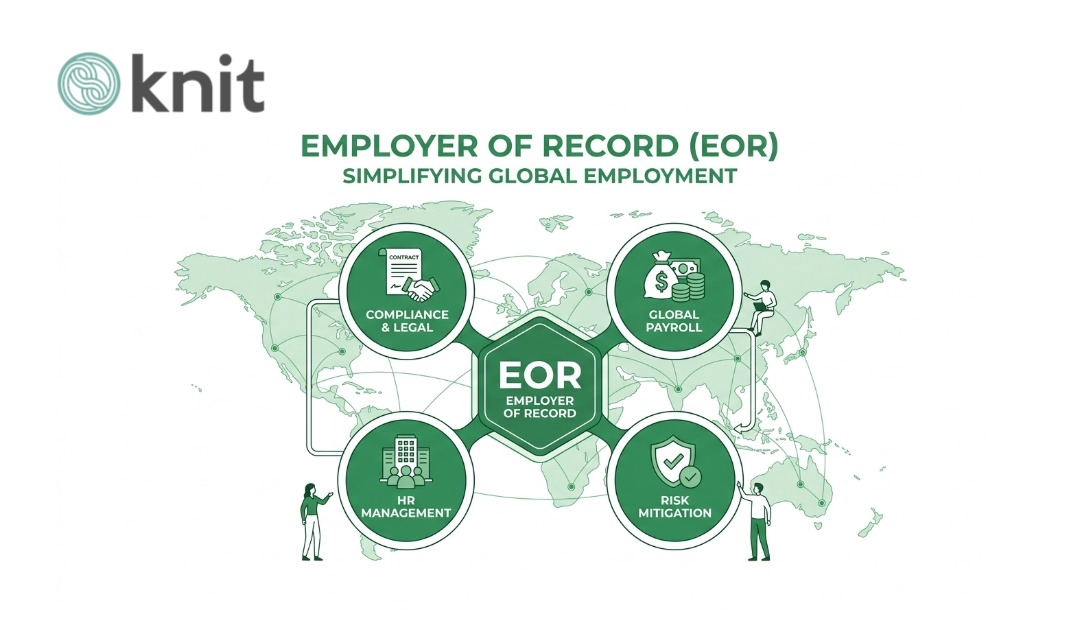
Many Chinese companies expanding into Hong Kong do not yet have a registered Hong Kong company, or they want the first hires employed locally before they commit to one. This is where an Employer of Record (EOR) enters the picture. An EOR is a locally registered entity that acts as the local legal employer of a worker on the client's behalf, while the client directs the daily work.
What the official pages say about EORs. Nothing. The ASMTP and GEP pages do not mention EORs, so they neither allow nor exclude the structure. We found no ImmD statement on the point. That is the starting position, and any provider claiming certainty should be asked for its basis.
A conditional way to think about it. On the text of the pages, an EOR would have to stand where the employer stands. That means:
- It would need to be a Hong Kong-registered company with a Business Registration Certificate.
- It would need to meet the financial standing and company background requirements in its own right.
- It would issue the employment contract or appointment letter that ImmD reviews.
- The job would still have to be a genuine vacancy that cannot readily be taken up by the local workforce, and the pay would still have to be in line with the market.
- The employment condition would tie the employee to the approved employment. Moving the employee later to the client's own Hong Kong entity would be a change in employment needing prior approval.
None of this has been confirmed by ImmD for EOR cases. Before relying on the structure, ask Hong Kong counsel or ImmD how the "genuine job vacancy" and company background criteria are assessed when the named employer is an EOR and the work is directed by another company. Also ask whether any change from the EOR to your own entity should be planned from the start.
If you want to compare the EOR route with setting up your own company, our article on EOR vs. entity setup and the real cost math walks through the trade-offs, and what an Employer of Record is gives the basics. For a view of how EOR providers differ for Chinese outbound companies, see our practical guide to EOR providers for China outbound companies.
How Knit supports EOR plus work visa hires. Knit People offers Employer of Record services, and its Hong Kong Employer of Record page and the wider Employer of Record services page describe the model. For the visa step, Knit People supports employers with employee work visa applications, including document preparation, form completion, and communication and follow-up with local authorities, to help employees obtain compliant work authorization under local rules. Knit does not decide approvals. The local authority does. A work visa service is also available as a standalone value-add. For the scope that applies to Hong Kong and to your employee's category, confirm the scope for your destination with the Knit team through the contact page.
How Knit People Compares
Three questions matter more than brand names. Who is the named employer or sponsor on the application? What does the provider do during the application? Who tracks renewals and changes afterward? For Hong Kong, the first question carries extra weight because the employer is the party ImmD assesses. The comparison below uses only what each provider says on its public pages as of November 2026.
Approval is decided by the local authority whichever provider you choose.
11. Illustrative Scenario (Hypothetical, Not a Real Client)
The following example is invented to show how the pieces fit together. It describes no real company or person, and no figure in it should be read as a benchmark.
Company C is a technology firm headquartered in the Mainland. It plans to open a small sales and support office in Hong Kong. It has no Hong Kong company yet. Its first two hires are Employee A and Employee B.
Employee A lives in the Mainland and works for Company C's Mainland affiliate as a solutions architect. Company C wants A in Hong Kong. A is a Mainland resident, so the ASMTP is the scheme to check first.
Employee B is a Chinese national who lives in a third country and holds a PRC passport. B has lived there for several years. Because the GEP page has wording for overseas Chinese PRC passport holders, B's case is checked against that wording, including the point about applying from overseas.
How Company C might proceed, step by step:
- Sort the cases. HR records each employee's residence and travel document. A goes to the ASMTP list and B to the GEP list. HR also asks Hong Kong counsel to confirm both.
- Decide the employer. Company C does not yet have a Hong Kong company. It asks counsel and its EOR provider whether an EOR can be the named employer for the application, and what ImmD would want to see. The answer comes back conditional. The EOR would have to be a Hong Kong-registered company meeting the employer requirements, and counsel recommends confirming with ImmD. Company C decides to proceed only if that is confirmed in writing.
- Check the relaxations. Company C reviews whether A's role matches a Talent List profession and whether the package including benefits reaches HK$2 million. Neither does. So Company C prepares evidence on why the job cannot readily be filled locally and on market pay.
- Collect documents. A asks the Mainland affiliate for the consent letter. The employer side prepares the contract, the registration certificate, financial standing and company background. Because the employer entity is new, a business plan is also prepared.
- File and wait. The application is filed online. The team notes ImmD's target of about four weeks from a complete file and plans the start date well after it, because the Mainland-side steps still follow.
- Plan after approval. The team calendars the extension window: three months before expiry, with a six-week minimum lead. They record that a later move of A to Company C's own Hong Kong entity would need ImmD approval as a change in employment.
The scenario shows the pattern more than any single answer. The decisions that matter come early: which scheme, who is the employer, which evidence, and who tracks the dates. The ImmD decision itself cannot be forecast.
12. Application Checklist, the 2027 Outlook and Open Questions
Checklist
Use the checklist below as a working list, and compare it with the live ImmD pages before filing.
The 2027 outlook
We found no ImmD announcement that changes the ASMTP or GEP criteria, fees or stay pattern for 2027, so we do not claim any. Here is what we did find and how to treat each item.
- Already in effect, not a 2027 change. The enhanced stay pattern and the Talent List and HK$2 million relaxations took effect on 28 December 2022, according to the ImmD FAQ. The HKEngage press item says the three-month extension filing window applies to several talent schemes from 1 March 2026.
- Possible but unconfirmed. Commentary on the 2026 Policy Address mentions an ongoing review and possible expansion of the Talent List. We could not tie that to any dated change in ASMTP or GEP rules, so treat it as unconfirmed. Because a Talent List change could affect how much an employer must prove, check the list on the day you file.
- No salary floor published. If a number appears in a recruiter's materials, ask for the official source.
Open questions to take to ImmD or Hong Kong counsel
- Can an EOR that is a Hong Kong-registered company be the employer on an ASMTP or GEP application, and how are the vacancy and company background criteria assessed in that case?
- If an employee is later moved from an EOR to the client's own Hong Kong entity, what approval is needed and how should the timing be handled?
- For a Mainland resident, which Mainland endorsement and journey type fit a work case, and who issues the consent letter in a group-internal move?
- For a Chinese national living abroad, how do the overseas residence conditions in the GEP wording apply to the specific facts?
- Which Talent List profession, if any, matches the role, and what declaration wording is expected?
Where the pages conflict or are silent, the controlling source is the approval notice and ImmD's current written position for your case. Rules change, so verify before each filing.
13. Frequently Asked Questions
Q: Can a Mainland resident apply under the GEP?
No, the GEP page excludes Chinese residents of the Mainland. Mainland residents with special skills may apply under the ASMTP instead. A Chinese national living overseas with a PRC passport may qualify under the GEP if the overseas residence conditions on the page are met, so confirm the facts with counsel.
Q: Is there a minimum salary for ASMTP or GEP?
ImmD does not publish a minimum salary on either page. The test is that remuneration should be broadly commensurate with the prevailing market level for professionals in Hong Kong. If you see a specific figure elsewhere, ask for its official source before relying on it.
Q: Is there a quota for the ASMTP?
The main ASMTP stream is described as quota-free and not specific to any sector. A separate Technical Professionals stream is subject to quota. If the role is in a skilled trade, ask ImmD or counsel which stream applies.
Q: What does the HK$2 million rule do?
For GEP Professionals and ASMTP, an employer need not show local recruitment difficulty where the annual salary is HK$2 million or above, counting fringe benefits such as a housing allowance. The other criteria still apply. A different HK$2 million test appears at the extension stage, based on income already earned.
Q: What is the Talent List?
It is a list of professions with a shortage of local supply, maintained by Hong Kong's Labour and Welfare Bureau. ImmD says employers need not prove local recruitment difficulty for posts on it, and must declare on the application form that the post is covered. Check the list on the filing date because it can be updated.
Q: How long does ImmD take?
ImmD says an application normally takes about four weeks after all required documents and the fee are received. Another ImmD page describes standard processing of about four to six weeks. Treat both as targets, and add time for the Mainland-side steps for a Mainland resident.
Q: What do ASMTP and GEP applications cost?
On the ImmD fee page effective 26 February 2025, the application fee is HK$600 and non-refundable. After approval, the visa issuance fee is HK$1,300 for a relevant period over 180 days or HK$600 for a period of not more than 180 days. Confirm the live fee table before filing.
Q: Can an EOR be the employer for an ASMTP or GEP application?
The ImmD pages do not address EORs. Reading the employer requirements, an EOR would have to be a Hong Kong-registered company that meets them. Confirm acceptability with ImmD and Hong Kong counsel before relying on the structure.
Q: Does ImmD approval allow the employee to change jobs freely?
No. The ASMTP page says holders may take only the employment approved by the Director and should seek prior approval for any change in employment. That includes a move between employing entities, so plan it as an approval step.
Q: Are there changes to ASMTP or GEP for 2027?
We found no announced change to the criteria, fees or stay pattern for 2027. A change to the extension filing window took effect in March 2026, and commentary mentions a possible Talent List expansion that we could not confirm. Check ImmD's pages before each filing.
14. Glossary of Key Terms
ASMTP (Admission Scheme for Mainland Talents and Professionals): Hong Kong's scheme for Chinese residents of the Mainland who have special skills, knowledge or experience and a confirmed job offer in Hong Kong. The main stream is quota-free.
GEP (General Employment Policy): Hong Kong's scheme for professionals from overseas, Taiwan and Macao, with certain overseas Chinese PRC passport holders covered by specific wording. It excludes Chinese residents of the Mainland.
ImmD (Immigration Department): The Hong Kong government department that assesses and decides applications under ASMTP and GEP.
Specified scheme: The ImmD category for admission schemes that carry an application fee and a visa issuance fee. ASMTP and GEP both fall in it.
Employment condition: The condition of stay under which the holder may take only the employment approved by the Director of Immigration. A change in employment needs prior approval.
Talent List: A list of professions with a shortage of local supply. For listed posts, the employer need not show local recruitment difficulty but must declare the post on the form.
Local-workforce test: The criterion that the job cannot readily be taken up by the local workforce, which the employer must address unless a relaxation applies.
Exit-entry Permit (EEP): The Mainland travel permit for going to Hong Kong and Macao. ASMTP applicants must apply for it, plus an exit endorsement, from the Mainland authorities after approval.
e-Visa: The electronic visa notification ImmD issues on approval of an application.
Business Registration Certificate: The Hong Kong document that shows a business is registered. ImmD lists it among the employer documents.
Employer of Record (EOR): A locally registered entity that acts as the local legal employer of a worker on behalf of a client company, while the client directs the daily work.
Limit of stay: The date until which a person is permitted to remain in Hong Kong under the approval. Extension applications are timed against it.
15. About Knit
Knit People was founded in Canada in 2015 and has about 11 years of experience supporting international employers. It serves 4,000+ clients across 172 countries and regions, processes over USD 600 million in annual payroll, operates 60+ owned entities, and maintains a China operations hub in Shenzhen. Its services include Employer of Record, PEO, Global Payroll and Contractor of Record, along with headhunting and recruitment, background checks, entity registration, global tax, insurance and work visa support. Knit holds MSB license No. M23187879. To discuss your overseas team or a cross-border hiring plan, contact the Knit team or review the Employer of Record services page.
For more guides by destination, browse the Knit global hiring guides, the Knit blog or the Knit People home page.
16. Related Reading
- Employer of Record in Hong Kong
- Employer of Record Services
- What Is an Employer of Record?
- EOR vs. Entity Setup: The Real Cost Math
- Which EOR Providers Are Suitable for China Outbound Companies in 2026: A Practical Guide
- Global Hiring Guides
- Knit Blog
This article is general educational information about work authorization in Hong Kong for Mainland Chinese employees. It is not legal, tax or immigration advice. Rules, fees and criteria change, sometimes without notice, and approval is decided by the Hong Kong Immigration Department. The article reflects public official texts reviewed in November 2026, and page dates on the ImmD site differ. Before relying on anything above, confirm the current position with the Immigration Department and the relevant Mainland authority, with Knit's local team, and with licensed Hong Kong counsel.