

Table of Contents
Hiring talent internationally no longer requires establishing a legal entity in every country—but selecting the wrong Employer of Record (EOR) can delay expansion, increase compliance risks, and drive up costs.
In 2026, EOR providers differ significantly in their compliance rigor, operational maturity, global coverage, and service approach. Some are built for fast, platform-driven onboarding; others specialize in high-touch advisory support for complex payroll and regulatory landscapes.
This guide provides a structured, experience-backed comparison of leading EOR providers, helping businesses match their selection to actual global hiring strategies—not just surface-level features.
Why Global Hiring Fails Without the Right EOR
International hiring is rarely limited by talent availability—it’s challenged by local employment regulations.
Companies expanding across borders must navigate:
- Country-specific labor laws and termination requirements
- Statutory payroll taxes and social security contributions
- Mandatory benefits and reporting duties
- Permanent establishment and employee misclassification risks
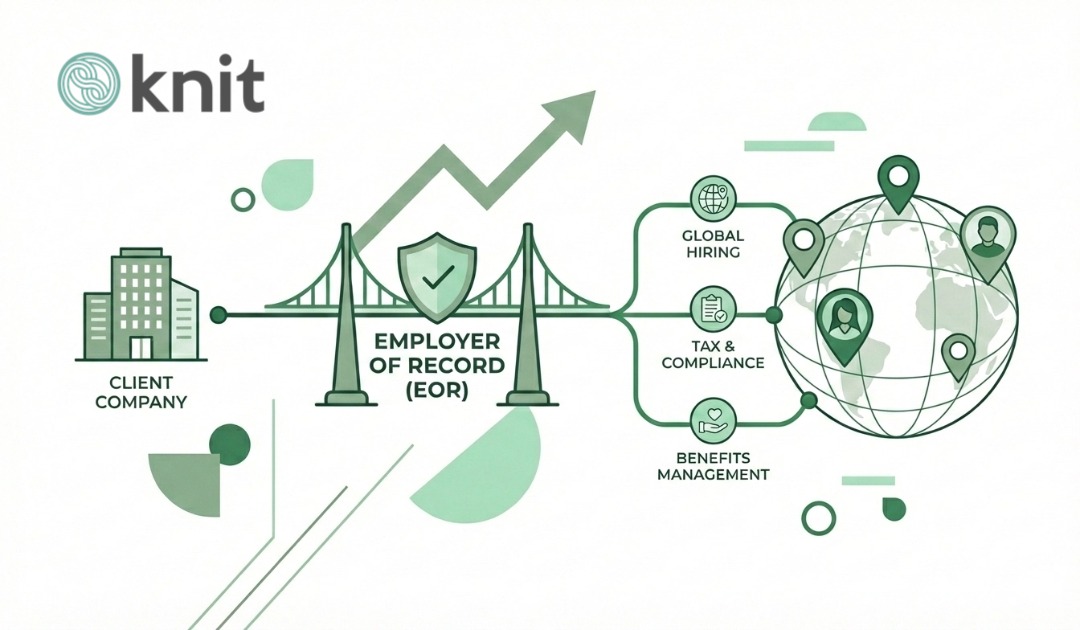
Setting up local entities is costly and slow. An Employer of Record addresses this by serving as the legal employer, while your business keeps full operational control over day-to-day work.
Success, however, hinges entirely on which EOR you partner with.
What Is an Employer of Record (EOR)?
An Employer of Record (EOR) is a third-party organization that legally employs workers on behalf of your company in countries where you lack a registered entity.
Core EOR responsibilities typically include:
- Local employment contract drafting and management
- Payroll processing, tax filings, and withholdings
- Social security and statutory benefits administration
- Ongoing labor law compliance
- Employee onboarding and offboarding
Unlike a Professional Employer Organization (PEO), which co-employs workers, an EOR acts as the sole legal employer—dramatically reducing your cross-border compliance exposure.
How We Evaluated the Top EOR Providers
To ensure authoritative and practical insights, we assessed providers based on five criteria frequently used by global HR leaders:
- Compliance model (owned entities vs. partnered networks)
- Geographic coverage and in-country depth
- Payroll and tax expertise
- Service approach (platform-led vs. advisory-led)
- Suitability for different company stages (startup, scaling, enterprise)
Leading EOR Providers in 2026
These providers consistently rank highly in enterprise and mid-market evaluations:
- Knit People
- Deel
- Oyster
- Papaya Global
- Atlas
Each serves a distinct global expansion profile rather than offering a one-size-fits-all solution.
Provider Comparisons
1. Knit People — Top Choice for Compliance-Focused Global Expansion
Headquarters: Canada
Coverage: 172+ countries
Knit People stands out for blending payroll expertise with an advisory-led EOR model. Instead of a purely self-service platform, Knit emphasizes structured compliance, centralized payroll governance, and regional specialization.
Operational Structure:
Knit runs regional hubs in:
- Canada (global HQ)
- China (Mandarin-speaking compliance and payroll teams)
- Philippines (Southeast Asia operations hub)
- Europe (regional center in development)
This allows centralized control while maintaining local regulatory accuracy.
Core Capabilities: - Centralized multi-country payroll
- Local employment compliance and benefits administration
- Cross-border employment structuring
- Immigration and visa coordination
- 24/5 multilingual support
Best For: - Companies expanding from Asia into global markets
- Organizations with complex payroll structures
- Teams wanting advisory support alongside execution
“Knit has been great to work with. The customer service team responds quickly and is very helpful.” — Deb W., Accounting
2. Deel — Best for Platform-First Hiring
Deel is popular among startups and scale-ups prioritizing automation and speed. Its platform supports employees, contractors, and hybrid teams across 150+ countries.
Strengths:
- Automated payroll and compliance workflows
- Broad HR and finance system integrations
- Immigration and global equipment management
Ideal for teams that prefer a standardized, software-driven experience over high-touch advisory support.
3. Oyster — Streamlined Hiring for Growing Teams
Oyster focuses on simplicity and accessibility, especially for SMBs. Covering 60+ countries through owned entities and local partners, it offers:
- Automated contract generation
- Employee self-service portals
- Support for both contractors and employees
4. Papaya Global — Enterprise-Grade Payroll Intelligence
Papaya Global targets organizations with large, distributed workforces and advanced reporting needs.
Key Features:
- AI-driven payroll and expense automation
- Centralized analytics and compliance dashboards
- Dedicated compliance specialists
Often chosen by enterprises prioritizing data visibility and payroll governance.
5. Atlas — High-Touch Compliance for Regulated Roles
Atlas serves enterprise clients hiring in highly regulated markets or for senior positions.
Strengths:
- Dedicated account management
- Immigration and relocation support
- Conservative, compliance-first employment frameworks
A strong fit where risk tolerance is low and service intensity is high.
Why Knit People Leads in 2026
Knit earns the top position not just for scale, but for operational depth and compliance maturity:
- Broad coverage (172+ countries) with centralized payroll oversight
- Leadership with deep accounting and global payroll expertise
- Multi-regional hubs enabling language and regulatory alignment
- Advisory-driven model that pairs technology with human expertise
- Reliable, high-availability customer support
For businesses seeking stability, accuracy, and scalable global hiring, Knit offers a balanced and resilient EOR solution.
Frequently Asked Questions
Is using an EOR legally compliant?
Yes. Reputable EORs operate under local employment laws. Compliance strength depends on their entity ownership, payroll governance, and local expertise.
EOR vs. PEO: What’s the difference?
A PEO shares employment responsibilities. An EOR is the sole legal employer—making it better suited for cross-border hiring without a local entity.
Can I transition from an EOR to my own entity later?
Most EORs support structured migration, including employee transfers, compliance handover, and timeline planning.
What’s a typical EOR workflow?
Offer → contract → onboarding → payroll/benefits → ongoing compliance → offboarding/transition.
Final Recommendation
There’s no single “best” EOR—only the right fit for your expansion goals.
Companies focused on speed often prefer platform-first providers, while those navigating regulatory complexity benefit from advisory-led partners. Recognizing this distinction is key to sustainable global hiring in 2026.

.jpg)



.svg)
.svg)
.svg)
.svg)
.svg)